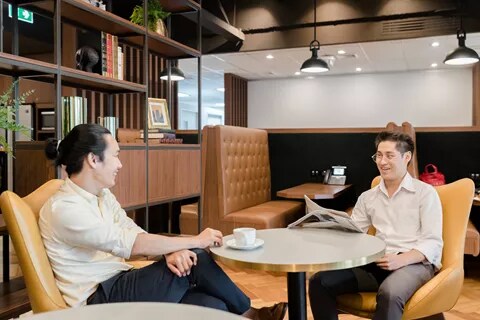
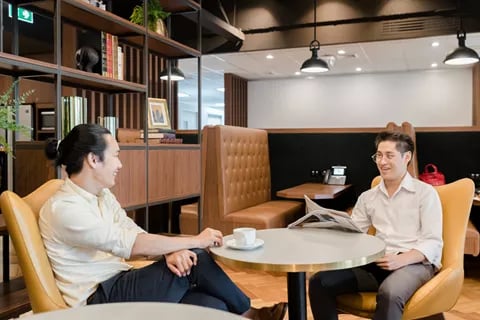
![working-from-cafe-_-th-blog-2026.jpg]()
The smell of fresh coffee, a corner table and the hum of conversation make a café an easy place to open your laptop. Then the Wi-Fi drops, the music drowns out your call, and the table barely fits your notebook. If you are weighing up a coworking space vs a coffee shop for your working week, the real question is which one can support a full day of professional work. For freelancers, founders and small teams in Kuala Lumpur, the answer becomes clear once you compare the two side by side.
Coworking Space vs Coffee Shop at a Glance
| |
Coffee shop
|
Coworking space |
| Built for |
Drinking coffee and socialising |
Focused work and meetings
|
| Noise |
Music, grinders, conversation
|
Quiet work areas and phone booths
|
| Wi-Fi |
Shared courtesy network
|
Managed business network
|
| Security |
You watch your own belongings
|
Reception, building access and IT support
|
| Meeting space |
A shared table
|
Bookable meeting rooms and boardrooms
|
| Business support |
None |
Reception, secretarial and IT help
|
|
Client impression
|
Casual
|
Professional |
1. Focus: Built for Work, Not Conversation
Cafés are designed for people to meet and talk. Customers come and go, the coffee machine runs all day, and the table next to you might host a birthday or a sales pitch. Seats are limited, tables are small, and you may be asked to give up your spot at the lunchtime rush. Short tasks survive this. Long stretches of focused work rarely do.
A coworking space is set up for the opposite purpose. Desks are sized for a laptop, a notebook and a second screen; the people around you are working too, and calls move into a phone booth instead of happening across the table. The environment itself tells you this is a place to get work done, and that makes it easier to settle into a productive rhythm.
2. Security: For Your Belongings and Your Data
In a café, you keep one eye on your laptop at all times. A trip to the counter or the restroom means packing up or asking a stranger to watch your bag. The risk is not only physical. CISA's guidance on securing wireless networks, published in 2021, notes that many public access points are not secured, the traffic they carry is not encrypted, and it lists shoulder surfing and device theft among the risks of working in public places.
A coworking space reduces these risks. Building access, a reception team and a managed network mean your equipment and your information are better protected, and you can step away from your desk without packing everything up.
3. Facilities: More Than a Table and a Plug
A café gives you a seat, a drink and, with luck, a power socket. The gaps appear as soon as the work gets more demanding: you need to print a contract, take a confidential call or host a client for an hour.
A coworking space covers these needs in one place. Printing, copying and scanning, phone booths for private calls, meeting rooms and boardrooms you can book when you need them, and a pantry with free drinks all sit on the same floor. For anyone who works with clients, that means one less thing to arrange every time a meeting comes up.
4. Business Support: People Who Handle the Small Jobs
A professional business needs more than an internet connection. Calls have to be answered, mail has to be received, and small admin tasks pile up quickly when you work alone. A café offers none of this.
Coworking spaces with an on-site team fill that gap. Receptionists can answer calls in your company name, secretaries can help with admin and meeting preparation, and IT support is on hand when something stops working. These services give a one-person business the kind of backing that is normally only found in a much larger firm.
5. Professional Image: Where You Meet Clients Matters
Meeting a client in a busy café may feel relaxed, but it rarely signals that you have your business under control. Pricing gets discussed within earshot of strangers, there is nowhere to present, and you have no say over the noise around you. First impressions shape how clients judge your work, and the setting is part of that impression.
Inviting a client to a meeting room in a landmark building sends a different message. It shows commitment, it gives the conversation privacy, and it lets you present your work properly. For a first meeting or a contract discussion, that difference can matter more than anything you say. We look at this more closely in our article on the hidden cost of working from a coffee shop.
What It Costs Compared With Café Working
Working from a café may seem free, but the costs add up. Total the drinks and snacks you buy each month to justify your seat, then compare that figure with the price of a hot desk.
At Servcorp's coworking space at Ilham Tower in KLCC, hot desks start from RM330 per month. Access runs during business hours, with 24/7 access available on the extended option. Dedicated desks, which come with round-the-clock access.
Every membership includes secure, monitored Wi-Fi, free coffee, tea and fruit water, phone booths, printing, and support from bilingual secretaries. If anything goes wrong, the in-house IT team responds within one hour, and meeting rooms can be booked whenever you need them. The tower is a two-minute walk from Ampang Park LRT station, and members can also use more than 150 Servcorp locations worldwide.
When a Café Still Has Its Place
Cafés remain useful for some work. A short session of writing or planning, a change of scene, or a casual catch-up with someone you already know all suit a coffee shop well. The difference lies in what you ask of the space. For a few hours of light work, a café is fine. For a full working day, client calls, confidential documents and meetings that decide business, a dedicated workspace does the job far better.
Final Thoughts
Remote work is judged on reliability. Clients need to know you can deliver consistently, and you need an environment that helps you focus, protect your work and present yourself well. A coworking space gives you those conditions without the cost and commitment of an office lease, while a café remains a pleasant place for the occasional lighter task. Look at how your week is actually spent, and give the work that matters most a space built for it.
Frequently Asked Questions