Setting up your tech startup's office in Malaysia doesn't have to drain your runway. The right serviced office solution can save you 70-90% compared to traditional space, while still giving you the professional presence investors and clients expect.
Malaysia's thriving startup ecosystem makes it an attractive hub for tech entrepreneurs. Whether you're building an AI platform in Cyberjaya or launching a fintech solution from KLCC, your office choice directly impacts your burn rate, team productivity, and credibility in the market.
This guide covers every office option available, costs for Kuala Lumpur locations, and the key requirements for tech startups in Malaysia.
What are the Office Options for Tech Startups in Malaysia?
Tech startups in Malaysia have four main office solutions, each serving different stages from solo founders to scaling teams of 20+.
Virtual Offices
Virtual offices give you a premium business address without physical space. You'll get a Kuala Lumpur CBD address for your business cards, a mailing address for packages, mail handling services, occasional meeting rooms access, and often a dedicated phone number.
Best for: Remote-first startups, digital nomads, solo founders, or companies establishing legal presence without needing daily office access.
Coworking Spaces
Coworking spaces provide flexible desk access in shared workspace environments. You'll work alongside other startups, entrepreneurs, and small business owners with access to meeting rooms, phone booths for private calls, high-speed internet, and printing facilities.
Hot desks offer non-fixed seating where you grab whatever desk is available each day. Dedicated desks give you a permanent spot where you can leave monitors and personal equipment. Many coworking spaces also offer event spaces for workshops and community events.
Best for: Early-stage startups wanting networking opportunities and flexibility without long-term commitments.
Serviced Offices
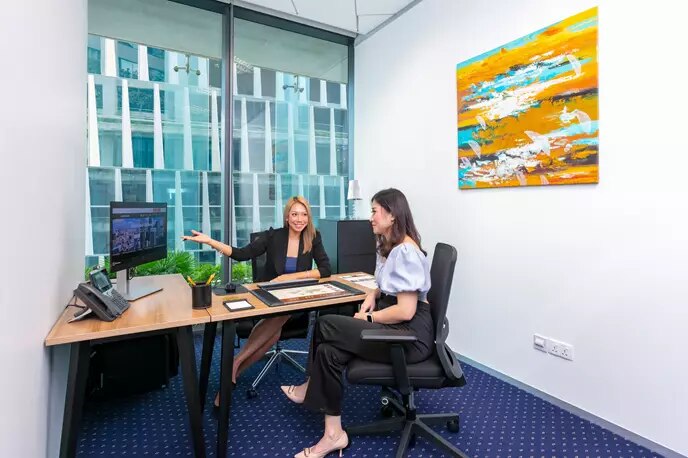
Serviced offices offer private office space with everything handled for you, including furniture, enterprise-grade internet, reception services, cleaning, and meeting rooms. You'll get your own lockable private office while the building operator manages all operations. Premium providers like Servcorp offer customisable firewall security, VLANs, VPN configurations, and access to global networks of business centres.
Best for: Teams of 2-20 who need professional private space, impressive client meeting facilities, and the ability to scale quickly without capital investment. Many successful tech companies maintain serviced offices long-term for the flexibility and premium amenities.
Traditional Office Space
Traditional office space means signing a lease, fitting out the space, buying furniture, and managing everything yourself. Bare office space requires substantial upfront investment in fit-out costs, furniture, utility deposits, and ongoing management.
Best for: Established companies with 20+ staff, predictable revenue, and specific infrastructure needs requiring custom build-outs.
How Much Does Office Space Cost in Malaysia?
Office space costs vary dramatically by type and location.
Here's what you'll actually pay:
Virtual offices: Start from RM550 per month. Kuala Lumpur CBD addresses command premium rates. Packages include company address for business cards, mail handling, phone number services, and meeting room credits.
Coworking spaces: Hot desk plans start from RM330 per month for flexible seating. Dedicated desks cost RM800 monthly for permanent spots. Most packages include access to meeting rooms, phone booths, high-speed internet, and community events.
Serviced offices: Start from RM1,400 per office monthly for 1-20+ people in Grade A buildings. This all-inclusive rate covers furniture, enterprise-grade WiFi, professional reception services, meeting rooms, phone booths, cleaning, and utilities. No hidden costs, no surprises. Flexible monthly terms mean you're not locked into multi-year commitments, allowing you to scale up or down as your team grows.
Traditional office space: Bare space costs RM6-12 per square foot monthly in KLCC. Factor in 3-6 months' fit-out costs, furniture (RM30,000+ for a small office), utility deposits, and ongoing management expenses.
Location pricing: Kuala Lumpur CBD locations like KLCC command premium rates due to prestige and accessibility. Areas with excellent transit connectivity provide the best value, making it easier for your team to commute and for clients to visit your office.
How to Choose the Right Office for Your Startup?
Your office choice depends on three factors: team size, budget, and who you need to impress.
Choose Based on Your Stage:
- Pre-revenue: Virtual office for legal presence. Work remotely.
- Early stage: Hot desks in coworking spaces for flexibility and networking.
- Growing: Dedicated desks or a small serviced office for a consistent workspace.
- Established: Serviced office with private space and professional amenities.
- Scale-up: Large serviced office if expansion or upgrade is needed.
Location Matters:
Kuala Lumpur CBD locations like KLCC signal credibility to investors, financial institutions, and enterprise clients. For B2B startups pitching to government agencies or large corporations, a premium business district address directly impacts first impressions.
Premium locations offer additional advantages beyond prestige. Transit connectivity through LRT and MRT lines makes commuting easier for your team across Greater Kuala Lumpur. Client meetings become more accessible without parking complications. International business visitors recognise KLCC addresses immediately, adding legitimacy to your startup.
For tech startups, the right location balances cost with the professional image needed to close enterprise deals and attract top talent.
Smart Progression Strategy:
Start with a virtual office to establish your business address and professional presence. Add hot desks when you need focused workspace and in-person collaboration. Upgrade to dedicated desks as your team grows and requires consistency. Move to a serviced office when you need private space with premium amenities. Many successful companies maintain serviced offices long-term, enjoying Grade A locations and enterprise-grade facilities without the capital investment required by traditional leases.
Technology Infrastructure for Tech Startups
Tech startups need enterprise-grade internet, network security, and reliable infrastructure to support development teams and client operations.
Internet and Connectivity: Development teams need reliable symmetric bandwidth—critical for code deployments, video demos, and client meetings. Dedicated internet access provides guaranteed speeds and service level agreements. Premium serviced offices include enterprise-grade internet as standard, while traditional offices require you to arrange your own connections.
Network Security: VPNs, firewalls, and secure, rocket-fast WiFi protect your intellectual property and client data. Malaysia's Personal Data Protection Act (PDPA) requires proper security measures for startups handling customer data. Premium serviced offices offer customisable firewall security, VLANs, and VPN configurations as standard.
Meeting Technology: Video conferencing, phone booths, and professional meeting rooms are essential for investor pitches and client demos. Serviced offices and coworking spaces include meeting rooms with built-in AV equipment.
Cloud Infrastructure: AWS has data centres in Malaysia, with Azure, Google Cloud, and Alibaba Cloud regionally available. Cloud infrastructure eliminates capital expenditure while providing enterprise-grade reliability.
Making the Right Choice for Your Startup
Your office strategy should preserve runway while building credibility. The progression from virtual office to coworking to serviced office gives you flexibility at each stage without locking you into expensive commitments.
Virtual offices establish your presence for RM550 monthly. Coworking spaces add physical workspace and networking for your first hires. Serviced offices provide the professional environment and premium amenities that scale with your team, without the six-figure capital investment of traditional space.
Many successful tech companies never move beyond serviced offices. The flexibility to scale monthly, premium business district addresses, enterprise-grade infrastructure, and zero capital expenditure often make more financial sense than traditional leases, even for established companies.
Choose based on your actual needs today, not where you hope to be in two years. The right office choice supports your growth without constraining it.
Frequently Asked Questions: